Geological characteristics and exploration methods of natural hydrogen
Abstract
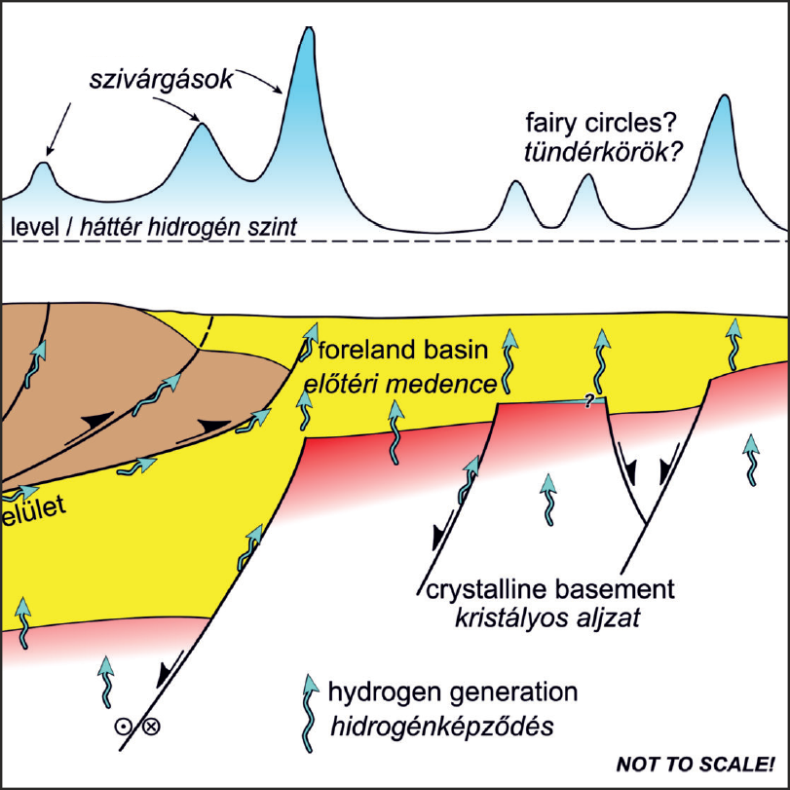
Natural hydrogen (H2, occurring naturally in the subsurface) is receiving increasing global attention as a potential energy source, although future exploitation requires the more complete understanding of hydrogen systems. Methodologies used in hydrocarbon exploration can be partly adopted to hydrogen systems, while hydrogen is expected to behave differently in the subsurface. The two most important hydrogen generating mechanisms are water-rock interactions (mainly serpentinization) and radiolysis (the breakdown of water by radioactive elements). Due to its high mobility, potential hydrogen fields are likely to be short-lived, dynamic systems, and the accumulation may only be provided by effective seals, such as evaporites. However, it is important to note that globally there is only one known natural hydrogen field discovered, the Bourakébougou field in Mali. In relation to its mobile nature, surface manifestations of hydrogen, such as mega-seeps, so-called fairy circles (sub-circular depressions), and micro-seepages associated with fault zones exist. Geophysical and geological methods used in the hydrocarbon industry can be partially applied to hydrogen exploration, but new tools are necessary to infer for the presence of hydrogen in the subsurface. Remote sensing methods are effective tools for mapping potential hydrogen seepages, primarily fairy circles. Soil gas measurements are widely accepted methods to identify hydrogen seeps and are under rapid methodological development. The presence/absence of other gases (CO2, Rn, He, CH4, N2) and direct analyses of fluids trapped as inclusions in rock samples can provide important additional proxies for hydrogen. The integration of observation- and model-based studies promote the better understanding of hydrogen systems, while further research is necessary for potential resource characterization and market utilization.