Helyben keletkező kozmogén izotópos geokronológia, a felszínfejlődés számszerűsítésének sokoldalú eszköze, 2. rész: A módszer alkalmazási területei
DOI:
https://doi.org/10.23928/foldt.kozl.2025.156.1.49Kulcsszavak:
helyben keletkező kozmogén izotópok, kitettségi kor, betemetődési kor, lepusztulási ráta, kormeghatározás, felszínfejlődésAbsztrakt
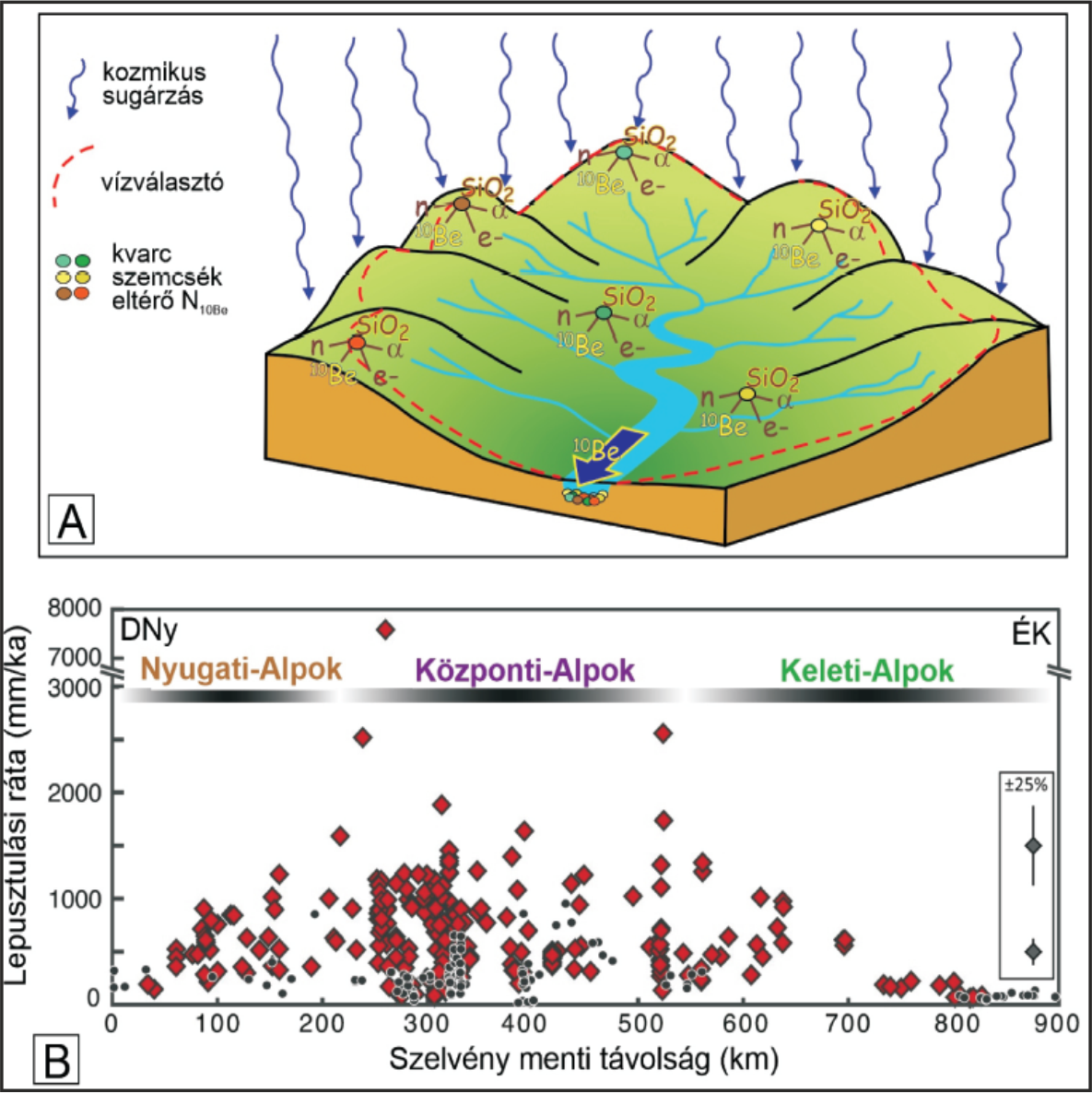
A litoszférában helyben keletkező kozmogén izotópos adatok jelentős szerepet játszanak a pliocén és negyedidőszaki glaciális, folyóvízi vagy akár szél általi felszínalakulás időbeliségének, a folyamatok sebességének megértésében. A különféle kozmogén izotópos adatok helyes értelmezésének és a kutatások során való alkalmazásának alapfeltétele a módszer elméleti és gyakorlati alapjainak a megismerése. A két részes tanulmány első részében került sor a módszer elméleti alapjainak bevezetésére. Ez a rész bemutatja a módszer alapvető felhasználási területeit, a kitettségi kor, a betemetődési kor és a lepusztulási ráta meghatározás mentetét, az egy és több izotópos alkalmazásokat és az ezekben rejlő lehetőségeket, különös tekintettel a legszélesebb körben használt 10Be és 26Al izotópokra. A tanulmány kitér a bizonytalansági tényezőkre és tárgyalja az alkalmazhatóság korlátait. Emellett ismerteti a módszer gyakorlati kérdéseit, ami segíthet a kutatás során felmerülő földtani-felszínfejlődési problémákhoz, valamint a mintázható kőzetekhez, geomorfológiai helyzethez leginkább megfelelő módszer kiválasztásában.
##submission.downloads##
Megjelent
Hogyan kell idézni
Folyóirat szám
Rovat