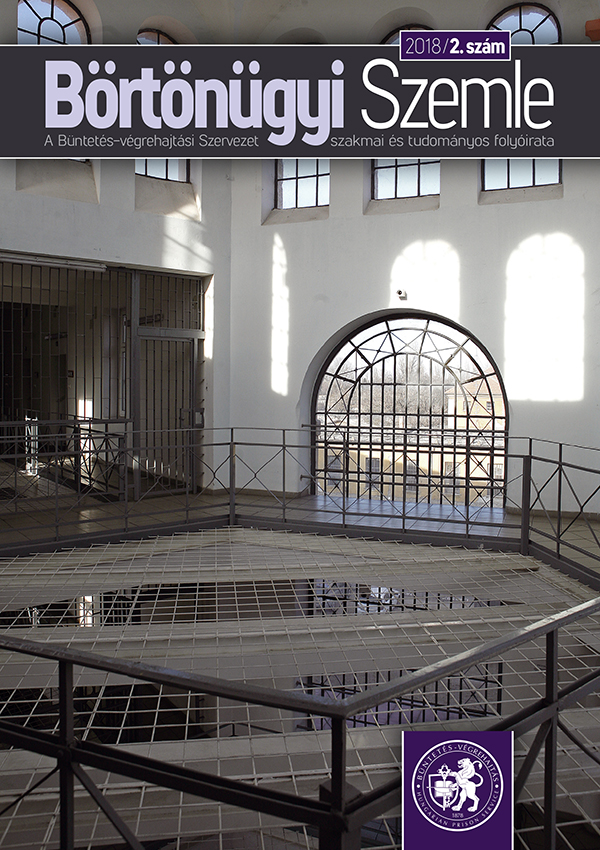
A Szegedi Fegyház és Börtön hosszúidős fogvatartási tapasztalatai
Absztrakt
Az extrém hosszúidős, illetve a tényleges életfogytig tartó szabadságvesztés végrehajtása – az elítéltek életútja, a velük való törődés tükrében – új kihívásokat eredményezett, mely egyúttal szakmai válaszutak keresésére is ösztönzi a szakembereket. A hazai jogrendben kiszabható legsúlyosabb büntetés végrehajtása olyan több tudományt és szakterületet átívelő munka, melynek sajátos céljaként – szemben másokkal – az ilyen büntetést töltő elítéltek börtöntársadalomba történő jogkövető beilleszkedése, illetve a törvény szabta kereteken belül lehetséges önmegvalósítása fogalmazható meg. E – végkimenetében bizonytalan – börtön-életút évtizedeket ível át, mely során az elítélt egy zárt közösség résztvevőjeként – melyben utastársai a vele foglalkozó börtöntisztviselők is – olyan lelki folyamatokat él meg, olyan hatások érhetik, melyek csak valószínűsíthetők, vagy nem is láthatók előre. Tanulmányunkban megpróbáltuk bemutatni a hosszúidős speciális rezsim – a jelenlegi hosszúidős speciális részleg – működésének kezdetétől a napjainkig terjedő történetét, szellemiségét, gyakorlati tapasztalatinkat, a demográfiai adatok és más tények, valamint a börtönpszichológus és az elítéltek gondolatainak átadásával.
Hivatkozások
Haviland, Jeannette M. - Rosario, Patricia - Wilson, Heidi H. - McGuire, Terry R. (2005): An Environmental Approach to Positive Emotion: Flowers. Evolutionary Psychology, 3. évf. 1. sz., p. 104-132.
https://doi.org/10.1177/147470490500300109
Antal Szilvia - Solt Ágnes (2013): A tényleges életfogytig tartó szabadságvesztés-büntetésre ítéltek longitudinális vizsgálata. Börtönügyi Szemle, 2013/1. sz., p. 33-51.
Az Európa Tanács Miniszteri Bizottságának Rec (2003) 23. sz. ajánlása a börtönigazgatásoknak az életfogytiglani szabadságvesztésre és más hosszú időtartamú börtönbüntetésre ítélt fogvatartottak kezeléséről.
Garami Lajos (1999): Élő halottak? A tényleges életfogytiglani szabadságvesztés végrehajtásának problémái. Börtönügyi Szemle, 1999/2. sz., p. 56-63.
Huszár László (1997): Az életfogytig tartó szabadságvesztés helyzete és perspektívái hazánkban és egyes más országokban. In: A büntetés-végrehajtás néhány problémája a kutatások tükrében. BVOP, Budapest (Bv. Szakkönyvtár sorozat 1997/2.), p. 35-43.
Matovics Csaba (2009): A Hosszúidős Speciális Rezsimű körletrész működésének tapasztalatai. Börtönügyi Szemle, 2009/2. sz., p. 53-61.
Ruzsonyi Péter (2016): Élni nem engedjük, meghalni nem hagyjuk őket - sorozatgyilkosok a rácson innen II. rész. Börtönügyi Szemle, 2016/3. sz., p. 41-60.
Útmutató a hosszúidős speciális rezsim működtetésére (2005). Szegedi Fegyház és Börtön, Szeged.