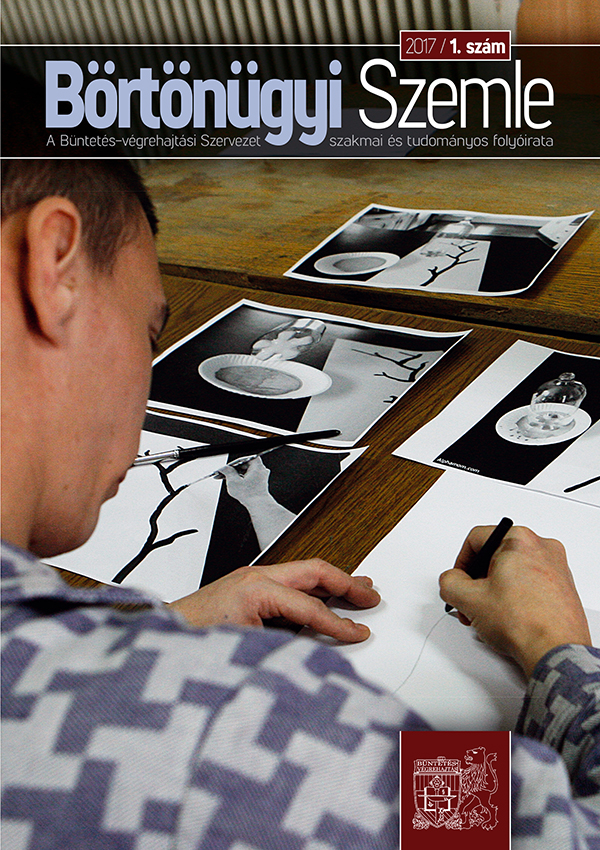
A kiégés és a fogvatartottakkal kapcsolatos attitűdök vizsgálata a büntetés-végrehajtás személyi állományának körében
Absztrakt
A büntetés-végrehajtás sikerének és kudarcának kulcsa a személyi állomány kezében, pontosabban a fejében van. A törvényben, irányelvekben, szabályzókban megfogalmazott elveket, ideákat és célokat a személyi állomány, és elsősorban annak végrehajtó szegmense teszi vagy nem teszi gyakorlattá, valósággá. Nem mindegy ezért, hogy a reintegrációt fáradt és kiábrándult, vagy elhivatott állomány végzi. Tanulmányunkban igyekszünk megvilágítani azt a speciális stresszterhelést, amely a büntetés-végrehajtási munkát végzőket éri és azt, hogy ennek milyen következménye lehet mind a személyi állományra, mind a büntetés-végrehajtási feladatok sikerére nézve. Ismertetjük a személyi állomány mentálhigiénés állapotára fókuszáló vizsgálatunk eredményét, és ennek alapján igyekszünk gyakorlatias, előremutató és konstruktív gondolatokkal javítani a jelenlegi gyakorlaton.
Hivatkozások
Balázs István (1995): Mentálhigiénia: kiégés, közöny, szerepzavar: az őrszemélyzet pszichés állapotáról. Börtönügyi Szemle, 14. évf., 3. sz., pp. 39-43.
Biró Mónika (2009): A stressz és kiégés vizsgálata a büntetés-végrehajtás dolgozói körében. Börtönügyi Szemle, 28. évf., 1. sz., pp. 11-30.
Fekete Sándor (1991): Segítő foglalkozások kockázatai - Helfer szindróma és burn out jelenség. Psychiatria Hungarica, 6. évf., 1. sz., pp. 17-29.
Freudenberger, Herbert J. (1974): Staff Burn-out. Journal of Social Issues, Vol. 30, Issue 1, pp. 159-175.
https://doi.org/10.1111/j.1540-4560.1974.tb00706.x
Hajduska Mariann (2010): Krízislélektan. ELTE Eötvös Kiadó, Budapest.
Hédervári Gabriella (2014): Kiégés szerepe a büntetés-végrehajtás területén dolgozó ápolók körében. Szakdolgozat, Szegedi Tudományegyetem, Szeged.
Kjelsberg, Ellen - Skoglund, Tom Hilding - Rustad, Aase-Bente (2007): Attitudes towards prisoners, as reported by prison inmates, prison employees and college students. BMC Public Health, Vol. 7, pp. 71-80.
https://doi.org/10.1186/1471-2458-7-71
Kormosói László (2000): A munka öröme: stresszhatások a személyi állomány körében. Börtönügyi Szemle, 19. évf., 4. sz., pp. 95-102.
Lajtár József (2017): 2016. évi évértékelő állománygyűlés. Pilisszentkereszt, 2017. 02. 22.
Maslach, Christina - Schaufeli, Wilmar B. - Leiter, Michael P. (2001): Job burnout. Annual Review of Psychology, Vol. 52, pp. 397-422.
https://doi.org/10.1146/annurev.psych.52.1.397
Maslach, Christina - Jackson, Susan E. (1981): The measurement of experienced burnout. Journal of Occupational Behaviour, Vol. 2, pp. 99-113.
https://doi.org/10.1002/job.4030020205
Matiasovics Mária (1996): Hol a hiba? A pszichológia szerepe a büntetés-végrehajtási szakemberek képzésében. Börtönügyi Szemle, 15. évf., 3. sz., pp. 46-51.
Melvin, Kenneth B. - Gramling, Lorraine K. - Gardner, William M. (1985): A scale to measure attitudes toward prisoners. Criminal Justice and Behavior, Vol. 12, Issue 2, pp. 241-253.
https://doi.org/10.1177/0093854885012002006
Menning Éva (1992): Veszélyes üzem. Börtönügyi Szemle, 11. évf., 2. sz., pp. 17-22.
Morgan, Robert D. - Van Haveren, Richard A. - Pearson, Christy A. (2002): Correctional officer burnout. Further Analyses. Criminal Justice and Behavior, Vol. 29, Issue 2, pp. 144-160.
https://doi.org/10.1177/0093854802029002002
Nagy Imre (2013): A bv. intézetek hivatásos állományú tagjainál jelentkező burn-out szindróma és a hipertónia gyakoriságának összefüggései. Börtönügyi Szemle, 21. évf., 2. sz., pp. 37-54.
Ónody Sarolta (2001): Kiégési tünetek (burnout szindróma) keletkezése és megoldási lehetőségei. Új Pedagógiai Szemle, 51. évf., 5. sz., pp. 80-85.
Pikó Bettina - Piczil Márta (2000): "És rajtunk ki segít….?". Esély: társadalom- és szociálpolitikai folyóirat, 11. évf., 1. sz., pp. 110-120.
Pines, Ayala Malach (2004): Adult attachment styles and their relationship to burnout: A preliminary, cross-cultural investigation. Work & Stress, Vol. 18, Issue 1, pp. 66-80.
https://doi.org/10.1080/02678370310001645025
Ruzsonyi Péter (2006): A büntetés-végrehajtási dolgozók felsőfokú képzése (1. rész). Börtönügyi Szemle, 25. évf., 4. sz., pp. 67-76.
Selye János (1976): Stressz distressz nélkül. Akadémiai Kiadó, Budapest.
Stauder Adrienne - Konkoly Thege Barna (2006): Az Észlelt Stressz Kérdőív (PSS) magyar verziójának jellemzői. Mentálhigiéné és Pszichoszomatika, 7. évf., 3. sz., pp. 203-216.
https://doi.org/10.1556/Mental.7.2006.3.4
Szabó Judit (2015): Speciális prevenció és dezisztencia. Doktori disszertáció, ELTE ÁJK, Budapest.
Szebeni Rita (2010): A kompetencia alapú oktatás pedagógus-személyiség háttere. Doktori disszertáció, Debreceni Egyetem, Debrecen.
Tandari-Kovács Mariann (2010): Érzelmi megterhelődés, lelki kiégés az egészségügyi dolgozók körében. Doktori disszertáció, Semmelweis Egyetem, Budapest.
Whitehead, John T. - Lindquist, Charles A. (1986): Correctional officer job burnout: A path model. Journal of Research in Crime and Delinquency, Vol. 23, Issue 1, pp. 23-42.