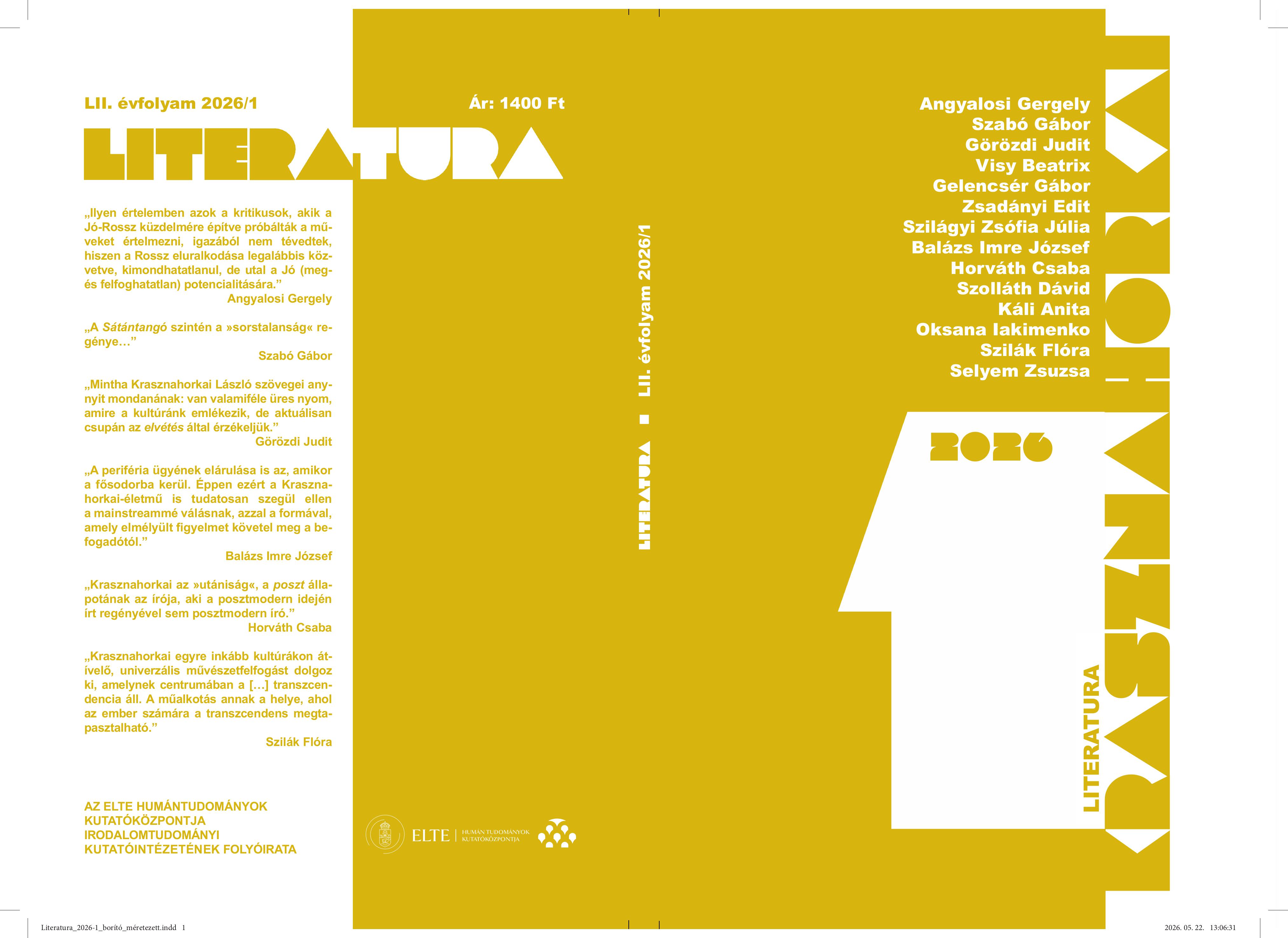
„Ne a Teremtést olvasd, te szerencsétlen!”
Absztrakt
The Nobel Prize jury has characterised László Krasznahorkai as a “master of apocalypse”. However, this apocalypse does not represent a pivotal moment in the transition between history and salvation; rather, it is the everyday experience of being left out of existence. Krasznahorkai is the author of “afterness”, of the post-state, and yet his Satantango, written in the postmodern era, cannot be considered merely a postmodern text. The study discusses the novel in terms of authentic sociographic and historical readings, the relationship between space and the self, and the subordinate’s language. Ultimately, the essay explores the potential of “small languages” in world literature from the perspective of apocalyptic depictions. It is submitted that Krasznahorkai’s literary oeuvre, characterised by a Central European image of the end of the world, has the potential to contribute to the transformation of conventional strategies in world literature.