The Evolution of Research on Transportation Network Sensitivity and the Examination of the Vulnerability of Critical Elements – a Literature Review
Abstract
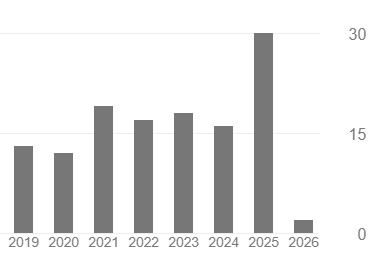
The sensitivity of transportation networks is a key issue in terms of strategic planning and emergency management. The study uses bibliometric analysis to explore research directions, methodological trends, and their temporal changes. The literature review also presents both network science and other approaches, highlighting the need for detailed, integrated models and realistic network assessments.
References
Ansari Esfeh, M., Kattan, L., Lam, W.H.K., Salari, M., Ansari Esfe, R. (2022) Road network vulnerability analysis considering the probability and consequence of disruptive events: A spatiotemporal incident impact approach, Transportation Research Part C: Emerging Technologies, 136, 103549. https://doi.org/10.1016/j.trc.2021.103549
Auerbach, J., Kim, H. (2022) Measuring Robustness and Coverage of Transportation Networks with Multiple Routes and Hubs, Annals of the American Association of Geographers, 112, pp. 1741–1760. https://doi.org/10.1080/24694452.2021.2000357
Auerbach, J., Kim, H. (2021) Local network connectivity optimization: an evaluation of heuristics applied to complex spatial networks, a transportation case study, and a spatial social network, PeerJ Computer Science, 7, e605. https://doi.org/10.7717/peerj-cs.605
Barabasi, A.-L., Albert, R. (1999) Emergence of scaling in random networks. Science, 286, pp. 509–512. https://doi.org/10.1126/science.286.5439.509
Barabasi, A.-L. (2016) Network Science, Libri.
Buzna, L., Peters, K., Helbing, D. (2006) Modelling the dynamics of disaster spreading in networks, Physica A: Statistical Mechanics and its Applications, 363, pp. 132–140. https://doi.org/10.1016/j.physa.2006.01.059
Chen, M., Lu, H. (2020) Analysis of Transportation Network Vulnerability and Resilience within an Urban Agglomeration: Case Study of the Greater Bay Area, China, Sustainability, 12, 7410. https://doi.org/10.3390/su12187410
Collins, A. J., Robinson, R. M., Jordan, C. A., Khattak, A. (2018) Development of a traffic incident model involving multiple municipalities for inclusion in large microscopic evacuation simulations, International Journal of Disaster Risk Reduction, 31, pp. 1223–1230. https://doi.org/10.1016/j.ijdrr.2017.12.010
Cui, C., Xiao, F., Aihui, P., Tao, L., Junli, Y. (2022) Mitigating the Vulnerability of a High-Speed Railway–Air Network by Optimizing the Location of Integrated Transportation Hubs, IEEE Access, 10, pp. 123920–123941. https://doi.org/10.1109/ACCESS.2022.3223709
Cui, Y., Liu, Z., Wu, H., Sun, P., Zhou, F. (2024) Evaluation of Urban Transportation Resilience under Extreme Weather Events”, Applied Sciences, 14, 4947. https://doi.org/10.3390/app14114947
Donovan, B., Work, D. B. (2017) Empirically quantifying city-scale transportation system resilience to extreme events”, Transportation Research Part C: Emerging Technologies, 79, pp. 333–346. https://doi.org/10.1016/j.trc.2017.03.002
Engidaw, G., Terdik, G. (2024) The Processing Spatial Data for Statistical Modeling and Visualization Case Study: INLA model for COVID-19 in Alabama, USA, Acta Technica Jaurinensis 17, pp. 130–142. https://doi.org/10.14513/actatechjaur.00746
Farooq, D., Tufail, R. F., Ali, M., Iqbal, H., Tariq, A. R. (2024) Investigation of Traffic Issues at Unsignalized Taxila Intersection and their Countermeasures, Period. Polytechica Transportation Engineering, 52, pp. 310–316. https://doi.org/10.3311/PPtr.23326
Ganin, A. A., Kitsak, M., Marchese, D., Keisler, J. M., Seager, T., Linkov, I. (2017) Resilience and efficiency in transportation networks, Science Advances, 3, e1701079. https://doi.org/10.1126/sciadv.1701079
Gu, Y., Fu, X., Liu, Z., Xu, X., Chen, A. (2020) Performance of transportation network under perturbations: Reliability, vulnerability, and resilience, Transportation Research Part E: Logistics and Transportation Review, 133, 101809. https://doi.org/10.1016/j.tre.2019.11.003
He, X., Liu, H. X. (2012) Modeling the day-to-day traffic evolution process after an unexpected network disruption, Transportation Research Part B: Methodological, 46, pp. 50–71. https://doi.org/10.1016/j.trb.2011.07.012
Heckmann, I., Comes, T., Nickel, S. (2015) A critical review on supply chain risk – Definition, measure and modeling, Omega, 52, pp. 119–132. https://doi.org/10.1016/j.omega.2014.10.004
Holló, P., Sipos, T. (2020) Közúti baleseti veszteségek aktualizálása, Közlekedéstudományi Szemle, 70(4), pp. 47–52. https://doi.org/10.24228/KTSZ.2020.4.4
Huang, X., Hu, S., Wang, W., Kaparias, I., Zhong, S., Na, X., Bell, M.G., Lee, D.-H. (2024) Identifying Critical Links in Urban Transportation Networks Based on Spatio-Temporal Dependency Learning, IEEE Transactions on Intelligent Transportation Systems, 25, pp. 5583–5597. https://doi.org/10.1109/TITS.2023.3339507
Jiang, X., Shan, X., Du, M. (2022) Modeling Network Capacity for Urban Multimodal Transportation Applications, Journal of Advanced Transportation, pp. 1–22. https://doi.org/10.1155/2022/6034369
Kurth, M., Kozlowski, W., Ganin, A., Mersky, A., Leung, B., Dykes, J., Kitsak, M., Linkov, I. (2020) Lack of resilience in transportation networks: Economic implications, Transportation Research Part D: Transport and Environment, 86, 102419. https://doi.org/10.1016/j.trd.2020.102419
Lee, C.-C., Rajput, A. A., Hsu, C.-W., Fan, C., Yuan, F., Dong, S., Esmalian, A., Farahmand, H., Patrascu, F. I., Liu, C.-F., Li, B., Ma, J., Mostafavi, A. (2022) Quantitative measures for integrating resilience into transportation planning practice: Study in Texas, T Transportation Research Part D: Transport and Environment, 113, 103496. https://doi.org/10.1016/j.trd.2022.103496
Leng, J., Zhai, J., Li, Q., Zhao, L. (2018) Construction of road network vulnerability evaluation index based on general travel cost, Physica A: Statistical Mechanics and its Applications, 493, pp. 421–429. https://doi.org/10.1016/j.physa.2017.11.018
Liu, J., Lu, H., Chen, M., Wang, J., Zhang, Y. (2020) Macro Perspective Research on Transportation Safety: An Empirical Analysis of Network Characteristics and Vulnerability, Sustainability, 12, 6267. https://doi.org/10.3390/su12156267
Liu, J., Lu, H., Ma, H., Liu, W. (2017) Network Vulnerability Analysis of Rail Transit Plans in Beijng-Tianjin-Hebei Region Considering Connectivity Reliability, Sustainability, 9, 1479. https://doi.org/10.3390/su9081479
Liu, S., He, M., Wu, Z., Lu, P., Gu, W. (2024) Spatial–temporal graph neural network traffic prediction based load balancing with reinforcement learning in cellular networks, Information Fusion, 103, 102079. https://doi.org/10.1016/j.inffus.2023.102079
Lu, Q.-C., Xu, P.-C., Zhang, J. (2021) Infrastructure-based transportation network vulnerability modeling and analysis, Physica A: Statistical Mechanics and its Applications, 584, 126350. https://doi.org/10.1016/j.physa.2021.126350
Mahajan, K., Kim, A. M. (2020) Vulnerability assessment of Alberta’s provincial highway network, Transportation Research Interdisciplinary Perspectives, 6, 100171. https://doi.org/10.1016/j.trip.2020.100171
Malandri, C., Mantecchini, L., Postorino, M. N. (2023) A comprehensive approach to assess transportation system resilience towards disruptive events. Case study on airside airport systems, Transport Policy, 139, pp. 109–122. https://doi.org/10.1016/j.tranpol.2023.05.011
Mattsson, L.-G., Jenelius, E. (2015) Vulnerability and resilience of transport systems – A discussion of recent research. Transportation Research Part A: Policy and Practice, 81, pp. 16–34. https://doi.org/10.1016/j.tra.2015.06.002
Melkote, S., Daskin, M. S. (2001) An integrated model of facility location and transportation network design, Transportation Research Part A: Policy and Practice, 35, pp. 515–538. https://doi.org/10.1016/S0965-8564(00)00005-7
Ötvös, V., Török, Á. (2024) Measurement of Accident Risk and a Case Study from Hungary, Periodica Polytechnica Transportation Engineering, 52, pp. 159–165. https://doi.org/10.3311/PPtr.22731
Piraveenan, M., Saripada, N. B. (2023) “Transportation Centrality: Quantifying the Relative Importance of Nodes in Transportation Networks Based on Traffic Modeling, IEEE Access, 11, pp. 142214–142234. https://doi.org/10.1109/ACCESS.2023.3339121
Rahdar, M., Wang, L., Dong, J., Hu, G. (2022) Resilient Transportation Network Design under Uncertain Link Capacity Using a Trilevel Optimization Model, Journal of Advanced Transportation, pp. 1–16. https://doi.org/10.1155/2022/5023518
Redzuan, A. A. H., Zakaria, R., Anuar, A. N., Aminudin, E., Yusof, N. M. (2022) Road Network Vulnerability Based on Diversion Routes to Reconnect Disrupted Road Segments, Sustainability, 14, 2244. https://doi.org/10.3390/su14042244
Reggiani, A. (2022) The Architecture of Connectivity: A Key to Network Vulnerability, Complexity and Resilience, Networks and Spatial Economics, 22, pp. 415–437. https://doi.org/10.1007/s11067-022-09563-y
Serdar, M. Z., Koç, M., Al-Ghamdi, S. G. (2022) Urban Transportation Networks Resilience: Indicators, Disturbances, and Assessment Methods, Sustainable Cities and Society, 76, 103452. https://doi.org/10.1016/j.scs.2021.103452
Sugishita, K., Asakura, Y. (2021) Vulnerability studies in the fields of transportation and complex networks: a citation network analysis, Public Transport, 13, pp. 1–34. https://doi.org/10.1007/s12469-020-00247-9
Sugiura, S., Chen, A. (2021) Vulnerability analysis of cut-capacity structure and OD demand using Gomory-Hu tree method, Transportation Research Part B: Methodological, 153, pp. 111–127. https://doi.org/10.1016/j.trb.2021.08.013
Sventekova, E., Urbancova, Z., Holla, K. (2021) Assessment of the Vulnerability of Selected Key Elements of Rail Transport, Slovak Case Study, Applied Sciences, 11, 6174. https://doi.org/10.3390/app11136174
Taylor, M. A. P., Susilawati (2012) Remoteness and accessibility in the vulnerability analysis of regional road networks, Transportation Research Part A: Policy and Practice, 46, pp. 761–771. https://doi.org/10.1016/j.tra.2012.02.008
Timothy, C., Matisziw, A., Murray T. (2009) Modeling s-t Path Availability to Support Disaster Vulnerability Assessment of Network Infrastructure, Computers & Operations Research, 36 (1), pp. 16-26. https://doi.org/10.1016/j.cor.2007.09.004
Toma-Danila, D., Armas, I., Tiganescu, A. (2020) Network-risk: an open GIS toolbox for estimating the implications of transportation network damage due to natural hazards, tested for Bucharest, Romania, Natural Hazards and Earth System Sciences, 20, pp. 1421–1439. https://doi.org/10.5194/nhess-20-1421-2020
Ulak, M. B., Konila Sriram, L. M., Kocatepe, A., Ozguven, E. E., Arghandeh, R. (2022) Resilience Characterization for Multilayer Infrastructure Networks, IEEE Intelligent Transportation Systems Magazine. 14, pp. 121–132. https://doi.org/10.1109/MITS.2021.3049368
Urbancová, Z., Sventeková, E. (2019) Assessing vulnerability of key elements of railway infrastructure, transportation Research Procedia, 40, pp. 1597–1603. https://doi.org/10.1016/j.trpro.2019.07.221
Wang, S., Zhang, J., Zhao, M., Min, X. (2017) Vulnerability analysis and critical areas identification of the power systems under terrorist attacks, Physica A: Statistical Mechanics and its Applications, 473, pp. 156–165. https://doi.org/10.1016/j.physa.2017.01.003
Wei, X., Wang, M., Meng, Q. (2024) Vulnerability Assessment and Reduction for Intermodal Freight Transportation Networks, Reliability Engineering & System Safety, 245, 109969. https://doi.org/10.1016/j.ress.2024.109969
Wen, T., Gao, Q., Chen, Y., Cheong, K. H. (2022) Exploring the vulnerability of transportation networks by entropy: A case study of Asia–Europe maritime transportation network, Reliability Engineering & System Safety, 226, 108578. https://doi.org/10.1016/j.ress.2022.108578
Wu, Y., Hou, G., Chen, S. (2021) Post-earthquake resilience assessment and longterm restoration prioritization of transportation network, Reliability Engineering & System Safety, 211, 107612. https://doi.org/10.1016/j.ress.2021.107612
Zhang, D., Du, F., Huang, H., Zhang, F., Ayyub, B. M., Beer, M. (2018) Resiliency assessment of urban rail transit networks: Shanghai metro as an example, Safety Science, 106, pp. 230–243. https://doi.org/10.1016/j.ssci.2018.03.023
Zhou, Y., Kundu, T., Qin, W., Goh, M., Sheu, J.-B. (2021) Vulnerability of the worldwide air transportation network to global catastrophes such as COVID-19, Transportation Research Part E: Logistics and Transportation Review, 154, 102469. https://doi.org/10.1016/j.tre.2021.102469
Zhou, Y., Wang, J., Yang, H. (2019) Resilience of Transportation Systems: Concepts and Comprehensive Review, IEEE Transactions on Intelligent Transportation Systems, 20, pp. 4262–4276. https://doi.org/10.1109/TITS.2018.2883766

Copyright (c) 2025 Scientific Review of Transport

This work is licensed under a Creative Commons Attribution-NonCommercial-NoDerivatives 4.0 International License.
All articles published in the journal are licensed under CC-BY-NC-ND 4.0 license. The copyright for submitted manuscripts remains with the author(s).