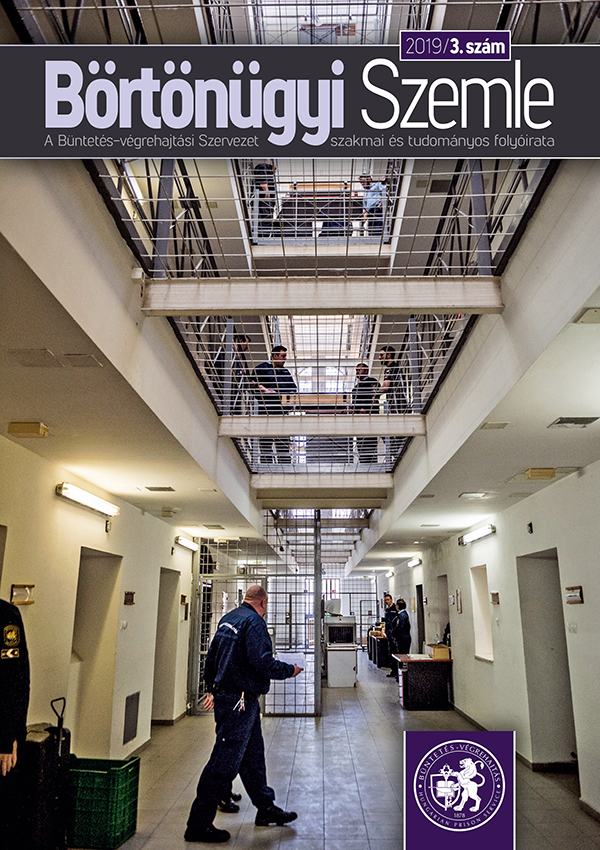
Researches supporting the operation of the Prison Service
Empirical research into the recidivism risks and the drug use of the prison inmates
Abstract
The purpose of this study is to present the general application possibilities of researches and analyses carried out by the Hungarian Prison Service and the background of the available knowledge, data and databases. This writing demonstrates as a case study what results we can reach within each area of use, taking into consideration the limitations resulting from the organizational features, through statistical surveys carried out on prisoners’ reoffending and on their drug use prior to their entering to the prison. In addition to the methodological issues of data production and processing in this study the main results of the two statistical researches are also presented. Surveys have focused primarily on factors that help the Hungarian Prison Service to identify and develop effective intervention strategies and management approaches.
References
Bolyki Orsolya - Sárik Eszter (2018): A bűnelkövetéshez vezető út megismerése visszaeső elítéltek körében - Előkészítő szakasz, In: Börtönügyi Szemle 2018/3.
Bonta, James; Andrews D. A. (2007): Risk-Need-Responsivity Model for Offender Assessment and Rehabilitation, Public Safety Canada
James, Nathan (2015): Risk and Needs Assessment in the Criminal. Justice System, Congressional Research Service
Schmehl János (2019): A Büntetés-végrehajtási Szervezet megújulásának áttekintése a hatályos Bv. törvény szellemében, In: Börtönügyi Szemle 2019/1, 100. o.
Somogyvári Mihály (2018): Kockázatelemzési rendszerek a büntetés-végrehajtásban In: Börtönügyi Szemle 2018/1.
Szabó Judit (2012): A bűnelkövetők rehabilitációjának meghatározó irányzatai a nemzetközi szakirodalom tükrében, In: Alkalmazott Pszichológia 2012/2., 73-88. o.