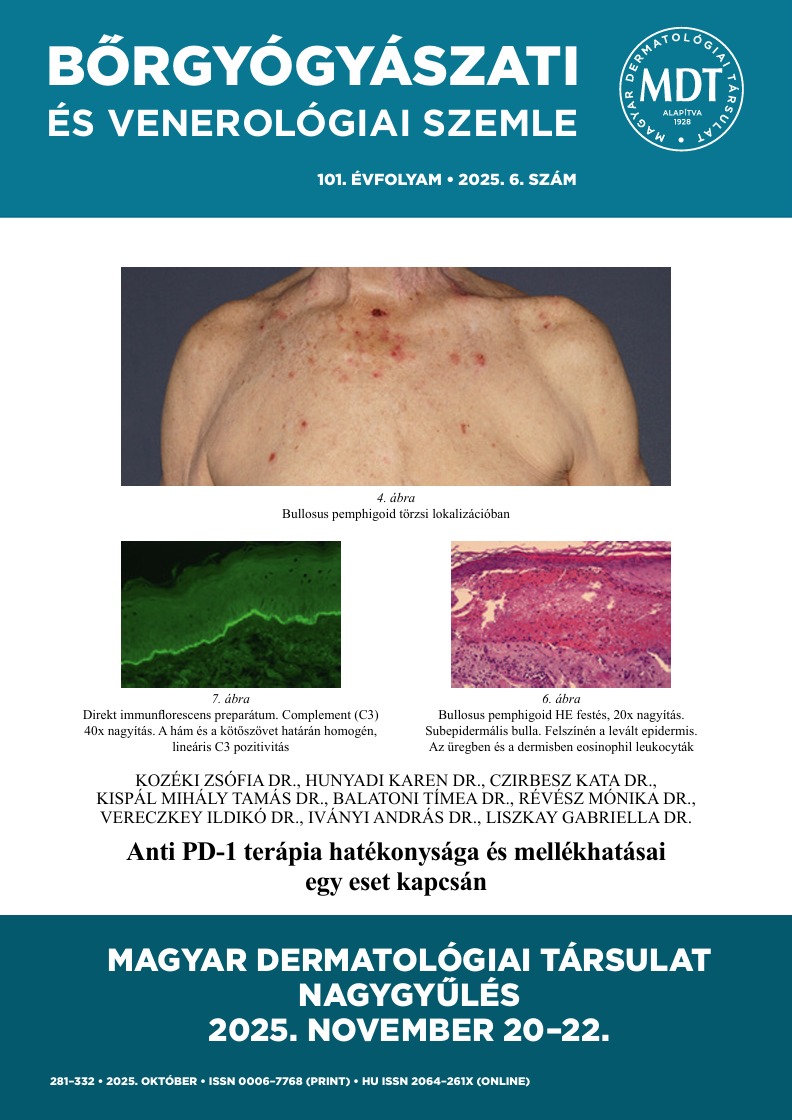
Efficacy and side effects of Anti-PD-1 therapy in a case study
Abstract
The incidence and prevalence of the second most common non-melanoma skin cancer, squamous cell carcinoma (SCC), originating from epidermal keratinocytes, are steadily increasing worldwide. In Hungary, approximately 3,000 new cases are registered annually. This malign ancy typically develops in older individuals, usually over the age of 70, and frequently arises in sun-exposed areas such as the head and neck region or the extremities. It often occurs on the basis of precancerous lesions (e.g., solar keratosis), scars, chronic inflammations, or late-stage radiodermatitis. The primary risk factors include cumulative UV exposure, fair skin type, and immunosuppression (1, 2, 3). In most cases, SCC is associated with a favorable prognosis. Surgical excision is the first-line treatment, while radiotherapy is indicated for postoperative or palliative purposes (4). In cases of locally advanced cutaneous SCC, the tumor grows invasively, potentially involving extracutaneous structures (e.g., bone, muscle, cartilage, nerve) without detectable metastases. Tumors with metastases to regional lymph nodes or distant organs occur in fewer than 5% of cases. Systemic therapy is required for locally advanced or metastatic SCC. Until 2019, chemotherapy was the only available systemic treatment option; however, it showed low efficacy and high toxicity (4, 5). A significant breakthrough in the treatment of unresectable, locally advanced, and metastatic SCC was the approval of PD-1 inhibitor immunotherapy, specifically cemiplimab, in Europe in 2019 (6). In this report, we present the case history of an 83-yearold male patient who was treated with PD-1 inhibitor immunotherapy for metastatic SCC. During the course of treatment, the patient achieved stable partial remission. However, multiple novel skin tumors and other dermatological side effects were observed throughout the therapy.