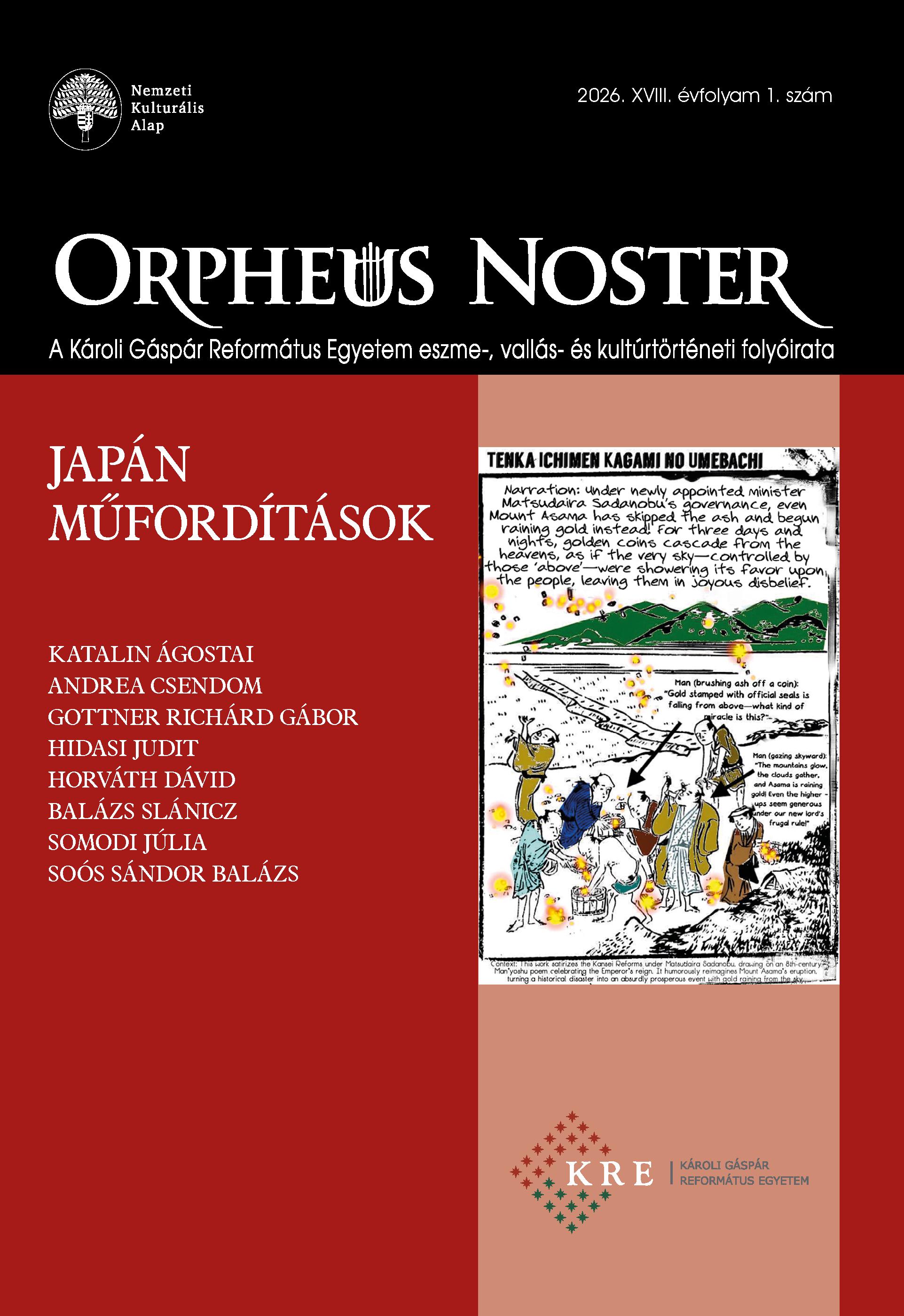
Edo-kori szatirikus képeskönyvek fordítása és újragondolása modern, globális közönség számára
Absztrakt
Ez a tanulmány az Edo-korszak japán szatirikus képeskönyvének, a kibjósinak modern fordítási módszereit vizsgálja. A hagyományos fordításokat gyakran magyarázó jegyzetek terhelik, amelyek megnehezítik a megértést a nem szakavatott olvasók számára. A tanulmány az Atarijasita Dzsihon Doija és a Tenka Icsimen Kagami no Umebacsi fordítási mintáin keresztül mutatja be a humor, a társadalomkritika, valamint a szöveg és az illusztrációk összetett kapcsolatának megőrzésével járó kihívásokat. Az elbeszélésbe és illusztrációkba ágyazott kulturális kontextus, valamint a szöveg és képek adaptációjának új típusú megközelítése egyensúlyt teremthet a történelmi hűség és a modern hozzáférhetőség között, biztosítva, hogy a kibjósi a mai olvasók számára is érthető és releváns olvasmány legyen.