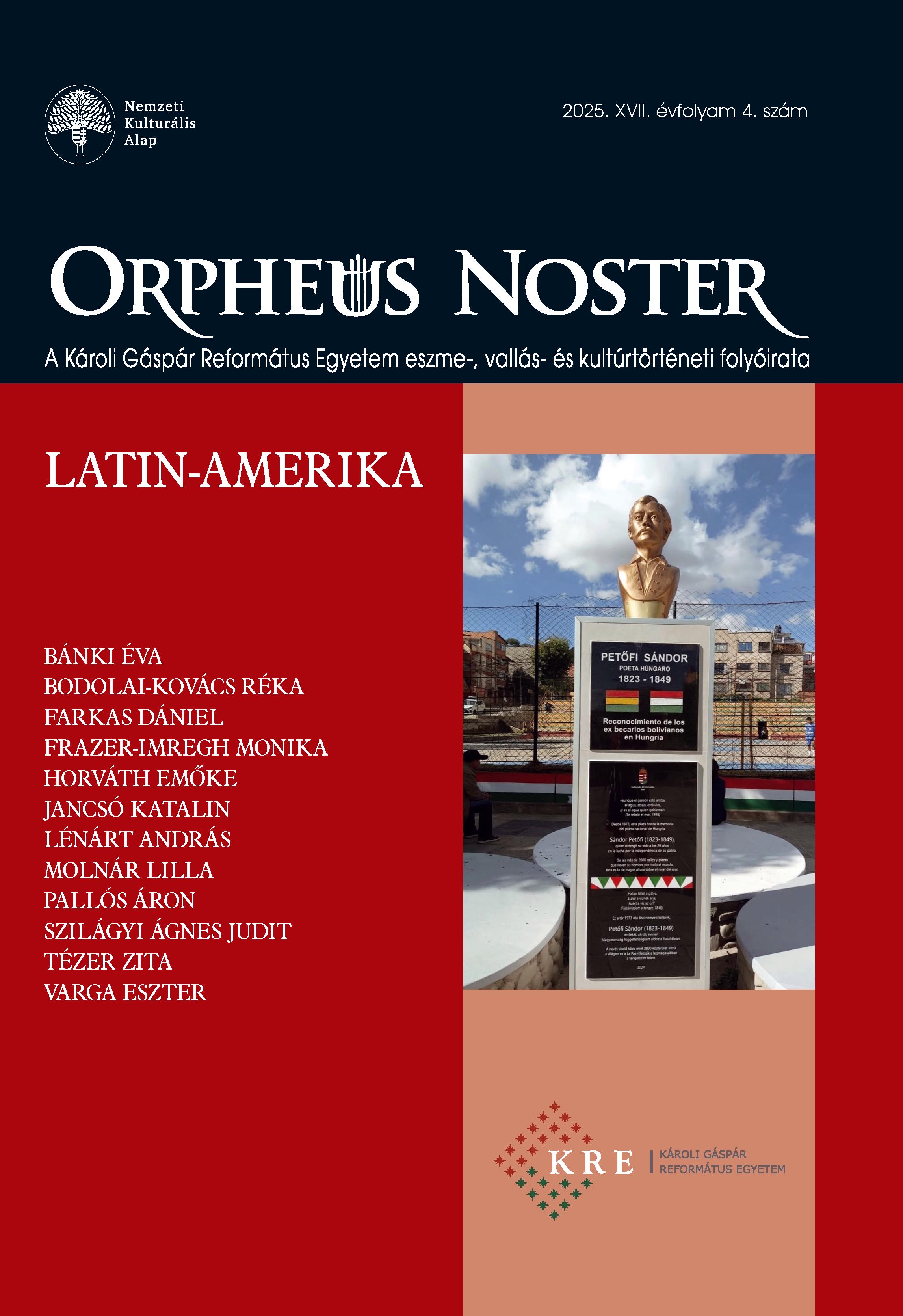
The World’s Highest Petőfi Square and Hungarian Cultural Diplomacy
Abstract
The article explores the international and cultural diplomatic context of the naming of Petőfi Square in La Paz and the related diplomatic efforts during the Kádár era. At the initiative of Sándor Róbel, attaché of the Hungarian Embassy in La Paz, the Hungarian Ministry of Foreign Affairs sent a bust of the poet Petőfi, created by Tamás Vigh, to Bolivia to commemorate the 150th anniversary of Petőfi’s birth. The statue was placed in a small square near Villarroel Square, a location of importance in Bolivia’s 20th-century politics of memory, and this square has borne Petőfi’s name ever since. This diplomatic manoeuvre capitalized on a timely opportunity to promote Hungarian culture and history in an ideologically neutral way during a tense period in Bolivian–Hungarian relations marked by the Banzer dictatorship. The cultural media campaign surrounding the statue’s installation fostered additional key connections for the embassy; for instance, Miguel Angel Flores, who would later serve as chargé d’affaires of Bolivia in Budapest, became connected with the embassy during this period.